People move here and assume the DMV means monuments. The monuments are fine. They are also the most photographed backdrops on the East Coast, they are crowded from sunrise, and the moment a Federal building enters the frame you are having a conversation about permits.
Everything below is somewhere I have actually shot. I have grouped them by what they give you, because the useful question is never where is pretty — it is what does this location do for the picture.
The Navy Yard and Yards Park — steel, water and clean lines
My go-to when a look needs modern architecture instead of brick. The pedestrian bridge gives you repeating steel arches that frame a subject beautifully, and the water throws light back up under the chin in the evening, which is free fill you would otherwise need a reflector for.
It works best for structured clothing — tailoring, sharp silhouettes, anything with a strong shape. Late afternoon into sunset. It gets busy on game nights, so check whether there is a home game before you plan an evening there.
Georgetown — texture, and the steps down to the water
Cobblestone, brick, painted doors, the canal, and the waterfront steps. Georgetown gives you more usable backgrounds per block than anywhere else in the city, which matters when you have a short window and several looks to get through.
The tradeoff is people. Go early on a weekday if you can. And the light is directional and tricky between the buildings — the narrow streets act like a snoot, which can be gorgeous if you use it deliberately and unflattering if you do not notice it happening.
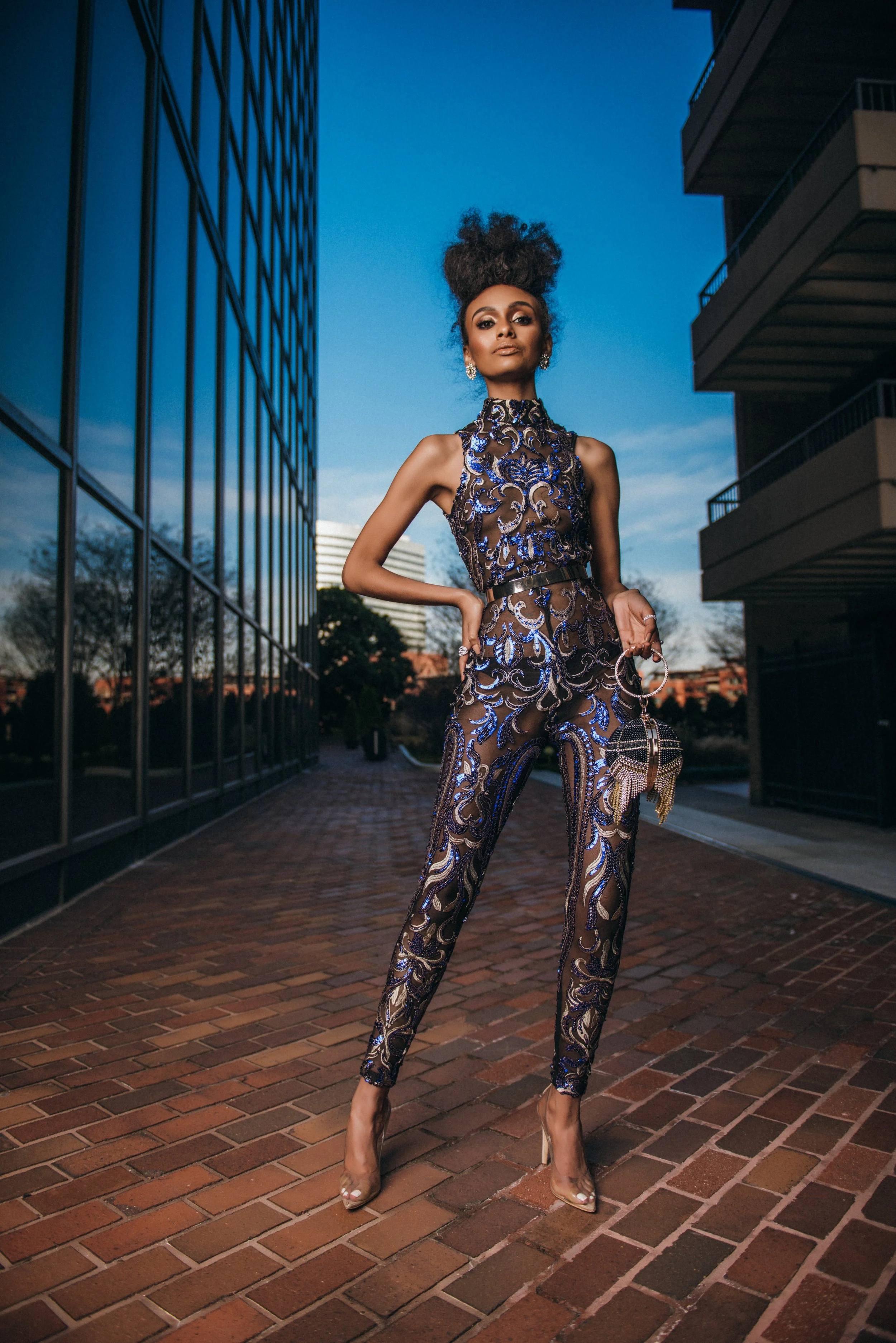
Location should do something for the picture, not just sit behind it.
Meridian Hill Park — the one that photographs like Europe
Also called Malcolm X Park, and one of my favorite places in the District. The cascading fountain and the stone terraces give you levels to work with, which is rare — most locations are flat, and elevation lets you shoot up or down and change the whole feel without moving the subject.
Best in the morning or early evening. Sundays bring the drum circle, which is either exactly the energy you want or exactly the noise you do not, depending on the shoot.
Blagden Alley and Shaw — murals and tight urban texture
When a look wants color and grit, this is where I go. Painted walls, fire escapes, brick, narrow alleys that let you throw a background out of focus at a reasonable distance. Murals change, so it is worth walking it a few days before rather than promising a client a specific wall.
A note I give every model: busy backgrounds want simple wardrobe. A mural does the shouting. If the outfit shouts too, nobody wins.
Hyattsville and the Gateway Arts District — industrial, and nobody is there
Just over the District line, and criminally underused. Industrial frontage, loading docks, painted walls, and a fraction of the foot traffic. When I want an editorial look without negotiating around tourists, this is the first place I think of.
It is also close enough to Beltsville that I can scout it on a whim, which is part of why it shows up in so much of my work.
The useful question is never where is pretty. It is what does this location do for the picture.
Studio 40E — for when the weather decides
Every outdoor plan needs an indoor answer. A studio removes weather, wind, crowds and the clock from the equation, and gives you total control of the light. If a shoot has a hard deliverable — a lookbook, a campaign, anything where you cannot come back next week — I would rather build the light than borrow it.
Soleado Lavender Farm — worth the drive, for about six weeks
Seasonal and a genuine drive, so it is not a casual choice. But when the lavender is up, it gives you something no city location can: a soft, repeating field of color that surrounds the subject instead of sitting behind them. Check bloom timing before committing — the window is short and it moves with the weather.
How I actually choose
Three questions, in this order. What is the subject wearing, and does the background compete with it? Where will the sun be at the hour we are shooting? And can we get two or three genuinely different looks without spending the session in a car?
That last one is the most underrated. A location that offers one great frame is a photo. A location that offers four different frames within a two-minute walk is a shoot.
Most of these I first learned properly by running PortraitMeet DC through them — a few dozen photographers and models working one location for an afternoon teaches you what a spot can do far faster than shooting it alone ever will.